10 Things to Look For When Choosing a Flight Attendant School in 2026
Published by:
Triad Aviation Academy
Published on:
Updated on:
Read time:
10 min read
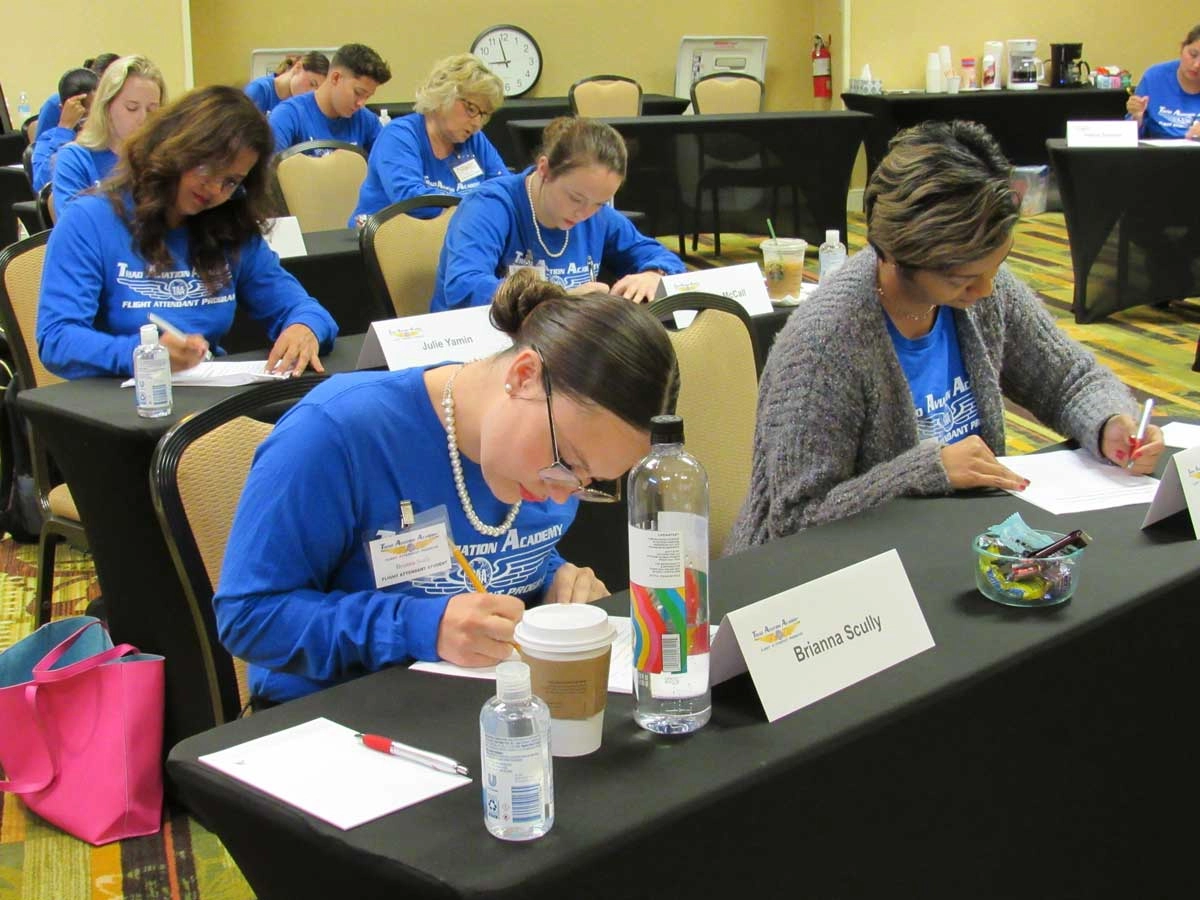
Picking a flight attendant school in 2026 is not like picking a weekend seminar. You’re about to hand over your savings, your time off, and your shot at an airline career to a program you’ve probably never set foot inside. Get it right, and you walk out with an interview, a job offer, and the muscle memory to survive your airline’s own training. Get it wrong, and you might still get hired, and then wash out weeks later because nobody ever put a fire extinguisher in your hand.
That second outcome happens more than most schools will admit. Getting hired is not the finish line. Passing your airline’s training is. So before you hand anyone your deposit, here are 10 red flags worth knowing, and what a legitimate, FAA-certified program looks like when it’s actually built to get you through both hurdles.
1. An Unrealistic “Hired on the Spot Before You Leave Class” Promise
A same-day hiring promise sounds incredible until you understand how airline hiring and FAA compliance actually work. In today’s aviation industry, no legitimate airline extends a permanent job offer on the spot inside a classroom. Every airline is bound by strict federal regulations requiring thorough 10-year background checks, drug screenings, and fingerprint clearances before issuing an official Conditional Job Offer (CJO).
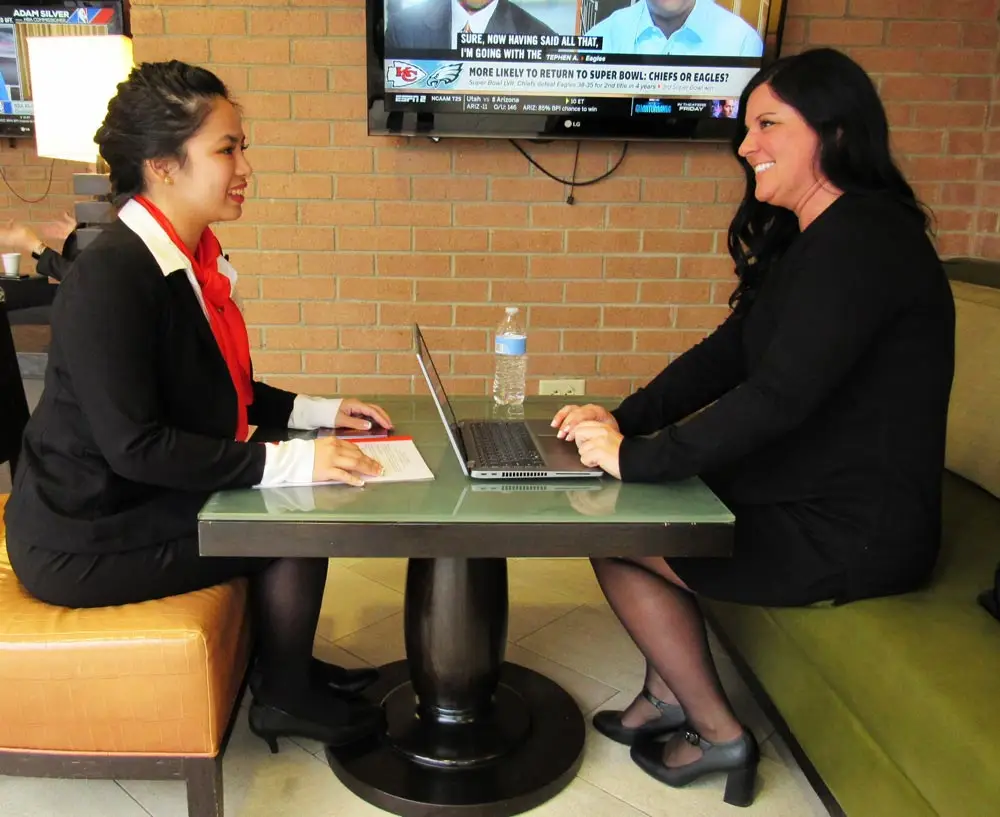
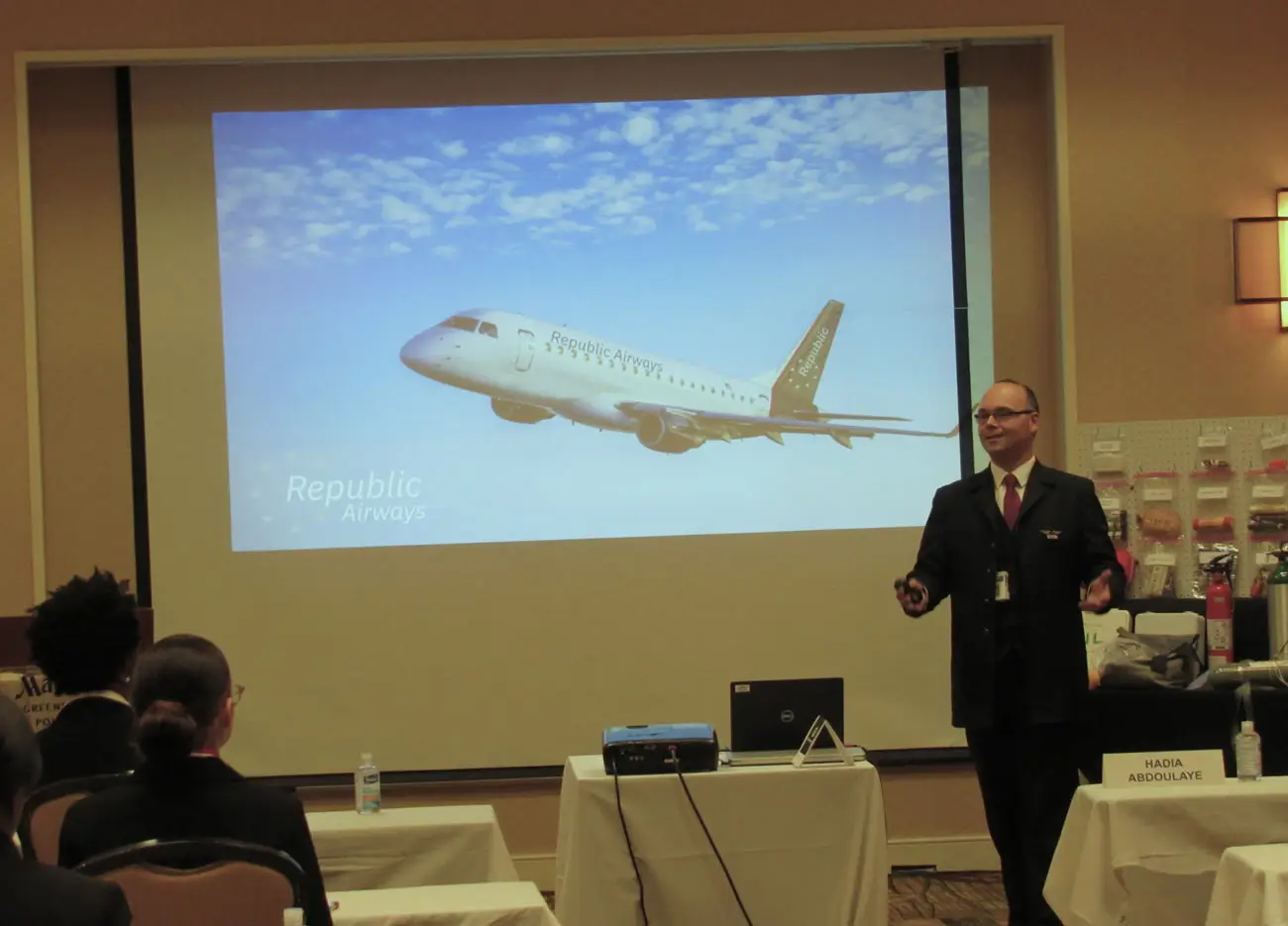
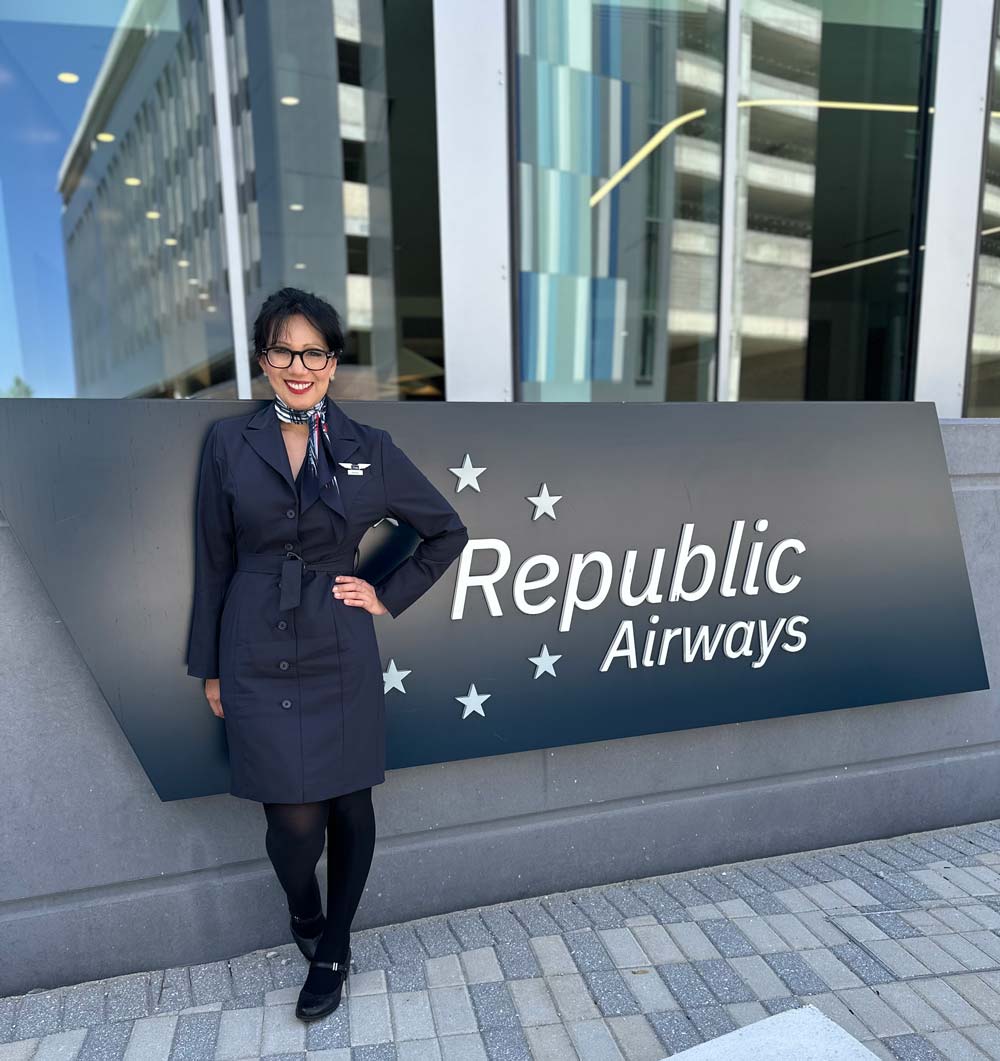
Recruiting processes have also evolved across the industry. While partner carriers like Republic Airways conduct in-person presentations and on-site interviews during class—with hiring decisions typically confirmed by the Monday immediately following class—other major regional airlines like SkyWest now deliver live presentations during class and conduct dedicated virtual interviews post-class (often within a couple of weeks).
If a school claims that 96% of students walk out the door with a contract in hand on day four, they are either misrepresenting airline compliance or resting on an outdated pitch.
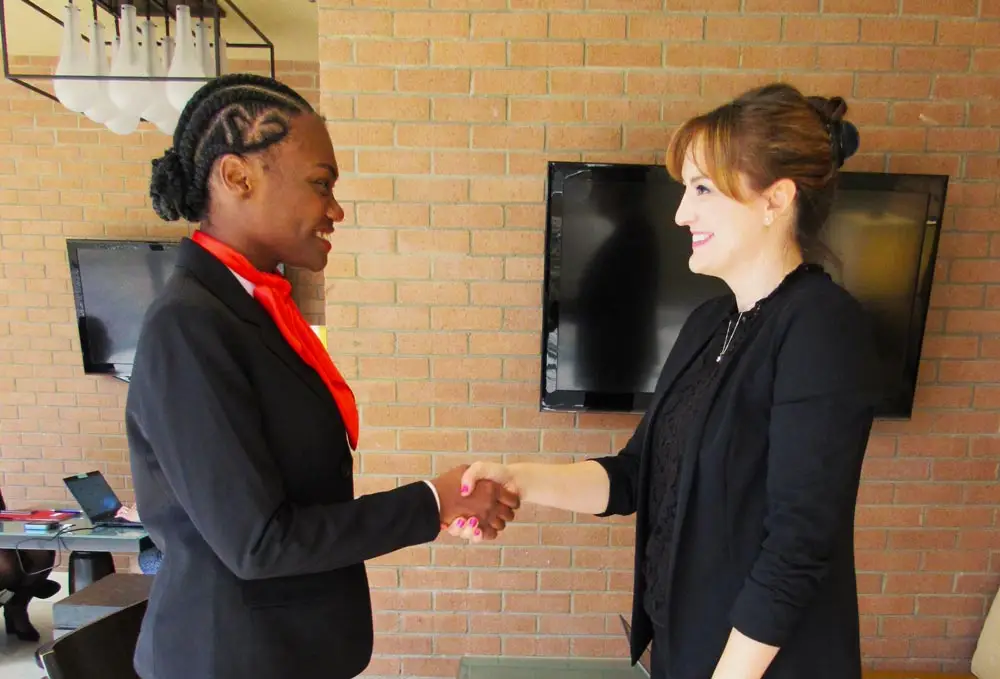
We do it the right way. We give you direct, transparent access to active airline recruiters through both in-person interviews and dedicated virtual hiring pipelines. Because our students arrive thoroughly prepared and interview-ready, about 96% of Triad Aviation Academy graduates receive job offers within 60 days of class. If you want to see how that translates to real careers, our graduates and testimonials page tracks alumni flying for Republic, SkyWest, Southwest, Delta, and other top carriers.
2. A School That Tells You to Just Cover Up Your Tattoos
If a program tells you to hide your tattoos instead of disclosing them, it is setting you up to fail somewhere down the line, not helping you succeed. Undisclosed tattoos almost always surface during airline training, and getting caught hiding one can end your training on the spot, after you’ve already given up weeks of your life and a paycheck to get there.
We require full disclosure of every tattoo up front, then guide you toward the airlines you actually qualify for instead of hoping nobody notices later. Check our FAQs page for the specifics on tattoo and background-check policies before you enroll anywhere.
3. A Generic CPR Card Instead of the Fundamentals
A CPR certificate looks reassuring on paper, but airlines run their own commands, cadence, and drills during initial training. If you learned it a different way first, that habit doesn’t disappear just because you’re holding a card, and reverting to old muscle memory during a drill is exactly the kind of thing that gets a new hire sent home.
That’s why our program teaches the fundamentals only: the compressions, the rhythm, the depth. We leave the airline-specific commands to your future employer, so you walk into training with nothing to unlearn. You’ll get hands-on practice inside our Flight Attendant Preparation Program curriculum, not a generic card that conflicts with what you’re taught on day one at your airline.
4. An In-Class Program That Runs Longer Than a Week
A long in-class program can feel thorough, but length alone doesn’t prepare you any better, and every extra week is another week of lost income and time away from home. In our experience, if a program needs more than about a week in the classroom to get you interview-ready and training-ready, something in the curriculum isn’t efficient.
We’ve run a focused 4-to-5-day, in-person program since 1998, 28 years of refining exactly what belongs in that window and what doesn’t. You can see the current class schedule on our program page.
5. A Price Tag That Doesn’t Match What You’re Getting
Cost alone doesn’t tell you much, but it’s worth asking exactly what’s included before you compare price tags: fire suppression training, a real cabin trainer, mock interviews with actual recruiters, and lifetime placement support all cost something to deliver. If a program’s price is high but the hands-on component is thin, you’re paying for a brand, not a training environment.
Our Premium Course starts at $1,395, and our all-inclusive option with a private room, meals, and transportation on airport grounds is $1,895. Both cover the full curriculum, not a stripped-down version of it. We also offer 0% interest, no-credit-check financing, so cost doesn’t have to be the reason you put this off. Details are on our tuition and financing page.
6. No Cabin Trainer, No Fire Drill, No Hands-On Practice
This is the one that matters most, and it’s the one most schools skip. If a program doesn’t have a cabin trainer, and you never fight a real fire, inflate a life vest, evacuate a mock cabin, or buckle into a jump seat, it might still get you an interview. It won’t get you through your airline’s own training, which is built entirely around exactly those skills.
Our campus includes a full-size, on-site cabin trainer with an FAA-spec 737 overwing exit, complete with a jump seat, galley, and serving cart for hands-on practice. You’ll run an active fire suppression drill and earn a certificate for it, work through evacuation and emergency ditching drills with life vests, and practice CPR basics, all before you ever set foot in your airline’s own training center.
7. Online-Only or Virtual-Only Programs
An online program is convenient, and convenience is tempting when you’re juggling a job and a move. But there’s no version of a screen that lets you practice inflating a life vest, running a fire extinguisher, or working a real jump seat. Without that hands-on rehearsal, you’re walking into your airline’s training center to try these skills for the first time under pressure, not the second or third.
We will never offer an online-only version of our program. Every student who enrolls trains in person, in our on-site cabin trainer, because that’s the only place these skills actually stick and we want you to succeed.
8. A School That Might Not Be Around for Your “Lifetime Placement”
Some schools promise lifetime placement support and then close their doors within a few years. If that happens, that promise closes with them, and you’re left with a certificate and no one to call. Longevity is one of the clearest signals that a program will still be answering the phone years from now.
Our Flight Attendant Preparation Program has run continuously since 1998, and thousands of graduates have come through it. Read more about our history and campus on our About Us page.
9. A “School” That’s Really a Couple of Retired Flight Attendants
Some programs are one or two people running a course out of a rented room. That can mean a lot of one-on-one attention, but it also means a small team is responsible for every part of your training: curriculum, drills, interview coaching, and airline relationships, with no larger staff or campus behind them.
Our staff is a diverse group of current and former flight attendants with over 100 years of combined crew experience, backed by a permanent, FAA-certified campus at Piedmont Triad International Airport. You can read individual instructor backgrounds on our team page.
10. A “School” That Isn’t Actually FAA-Certified
Calling yourself a flight attendant academy doesn’t make you one. A physical campus, a real curriculum, and FAA certification are what separate an actual school from a seminar with a name.
We are an FAA-certified flight school, training both pilots and flight attendants on the same campus at Piedmont Triad International Airport, not a rented conference room, and not a side project.
What a Legitimate, Hands-On Program Actually Looks Like in 2026
Here’s the short version of everything above, side by side.
| Red Flag | What It Usually Means | What We Do Instead |
|---|---|---|
| Unrealistic “hired on the spot” promises | Ignores required background checks and modern hiring timelines | Direct recruiter access (in-person & virtual pipelines), fast hiring decisions (96% placed) |
| “Just hide your tattoos” advice | You’ll likely be caught during airline training | Full disclosure up front, matched to the airlines you qualify for |
| Generic CPR certificate | You may have to unlearn commands your airline teaches differently | We teach the fundamentals and leave the rest to your airline |
| Multi-week in-class program | More time and cost without more preparation | A focused 4-to-5-day, in-person program |
| Vague or inflated pricing | You’re paying for a brand, not a training environment | Transparent tiers starting at $1,395, plus 0% financing |
| No cabin trainer or drills | You’ll rehearse these skills for the first time at your airline | A full-size cabin trainer, live fire drill, and evacuation practice |
| Online-only format | No way to practice hands-on skills before airline training | In-person training only, every session |
| Newer, unproven school | ”Lifetime placement” may not outlast the school | Continuously operating since 1998 |
| One or two-person “academy” | A small team covers every part of your training | A full staff with 100+ years of combined crew experience |
| No FAA certification | Not an actual accredited flight school | An FAA-certified flight school on a real campus |
Every one of these comes back to the same idea: getting hired isn’t the goal. Surviving your airline’s own training is. A program built around hands-on practice gives you both. You can see the full curriculum on our Flight Attendant Preparation Program page.
Frequently Asked Questions
How long is a legitimate flight attendant training program? There’s no single required length, but a program built around focused, hands-on training (not padded classroom time) typically runs about 4 to 5 days in person.
Do I need a cabin trainer to get hired? You don’t need one to land an interview, but hands-on practice with evacuation drills, fire suppression, and jump seat procedures is what prepares you to pass your airline’s own training after you’re hired.
Should I disclose my tattoos to a flight attendant school? Yes. A program that has you disclose tattoos up front can guide you toward the airlines you’re likely to qualify for. One that tells you to hide them is setting you up to be caught later.
Is online-only flight attendant training worth it? Online training can cover terminology and interview prep, but it can’t replace hands-on practice with real equipment, which is what your airline’s training will actually test.
How much should a flight attendant program cost? Cost varies by what’s included. Ask what the price actually covers (cabin trainer access, live drills, mock interviews, and placement support) before comparing numbers across schools.
Does Triad Aviation Academy offer financing? Yes. We offer 0% interest, no-credit-check financing so tuition isn’t the reason you delay training. Visit our tuition and financing page for current options.
Ready to Train Somewhere That Gets You Through Both Hurdles
You’ve seen what to watch for and what a legitimate program actually includes: an FAA-certified campus, a full-size cabin trainer, live fire and evacuation drills, honest hiring numbers, and a staff that’s actually flown the line. Now it’s your move.
Enroll now to start your Flight Attendant Preparation Program, or reach out with any questions before you commit. We’re glad to walk you through exactly what your training will look like.